
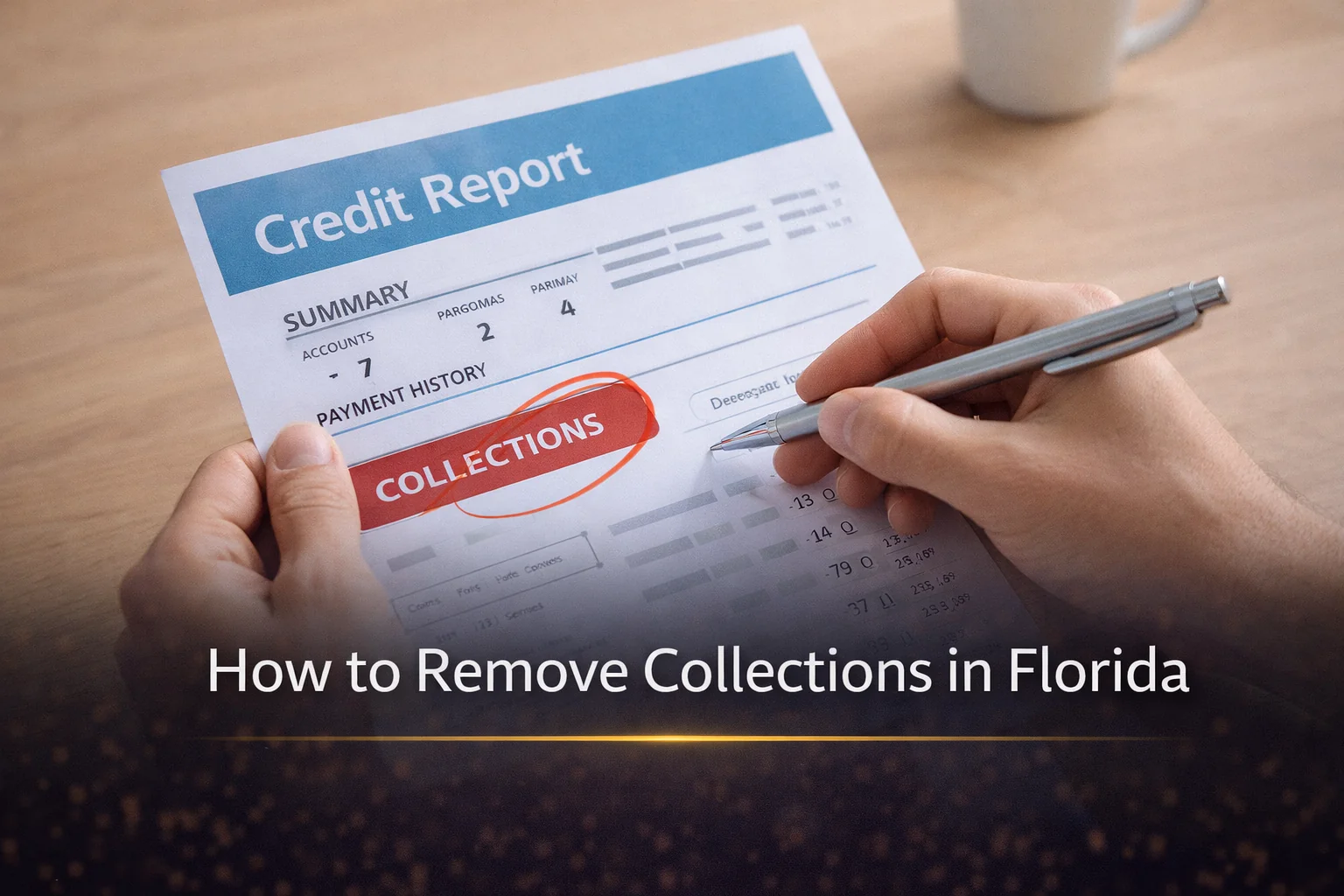
A Federal Trade Commission study found that 1 in 5 Americans has a material error on at least one of their credit reports — an error significant enough to affect their credit score. For Florida homebuyers preparing for a mortgage application, an undetected error can mean a higher interest rate, a loan denial, or months of unnecessary delay.
The good news: you have legally guaranteed rights to dispute any information that is inaccurate, incomplete, or unverifiable — and the bureaus are required to investigate within 30 days. This guide walks you through every step of the process for all three bureaus.
How Common Credit Report Errors Are
The FTC's landmark study found that 26% of consumers had at least one potentially material error on their report. Among the most common problems found in Florida consumer files:
- Wrong account balances — creditors report the wrong outstanding balance, inflating your apparent utilization
- Duplicate accounts — the same debt appears twice, sometimes under the original creditor and again as a collection
- Incorrect payment status — a payment made on time is reported as 30 or 60 days late
- Wrong date of first delinquency — an old collection account has its date re-aged, making it appear newer than it is
- Accounts that don't belong to you — mixed files (two people with similar names) or identity theft
- Closed accounts shown as open — inflating your apparent number of active accounts
- Outdated negative items — collections, charge-offs, or bankruptcies still appearing beyond the 7- or 10-year reporting limit
Step 1: Get Your Free Credit Reports
You are entitled to one free credit report from each bureau — Equifax, Experian, and TransUnion — every 12 months at AnnualCreditReport.com, which is the only federally authorized free report source. During the COVID-19 period the bureaus offered weekly free reports, and this policy has continued in modified form; check the current availability when you access the site.
Pull all three reports at once. Errors often appear on only one or two bureaus — a creditor that reports to one may not report to another, and dispute results apply only to the bureau where you filed. Review each report line by line, paying particular attention to:
- Account balances and credit limits
- Payment history (any lates that you believe were on time)
- Account ownership (look for unfamiliar accounts)
- Open/closed status of accounts
- Date opened and date of first delinquency on negative accounts
- Duplicate tradelines for the same account
Step 2: Dispute Online With Each Bureau
Each bureau has an online dispute portal that is the fastest way to initiate a dispute. For significant errors that you may need to escalate, consider filing by certified mail so you have a dated paper trail.
Equifax
File at equifax.com/personal/dispute-center. You'll need to create or log into your myEquifax account. Select the specific item to dispute, choose the reason from the dropdown menu, add your written explanation, and upload supporting documents if available. Equifax will send you a confirmation with a dispute tracking number.
Experian
File at experian.com/disputes. You can dispute online, by phone, or by mail. Online is fastest. Experian's portal shows your full report and allows you to flag specific items. After submission you'll receive a confirmation and case number. Experian's online system often provides faster resolution than the other bureaus.
TransUnion
File at transunion.com/credit-disputes. TransUnion's dispute center requires account registration. After filing, you can track the status of your dispute through the portal. TransUnion also allows phone disputes at 1-800-916-8800 if you prefer.
Write your dispute reason specifically. "This account balance is incorrect — the actual balance as of [date] was $1,240, not $3,890 as reported" is far more actionable than "this is wrong." Specificity forces the bureau to investigate the exact claim.
Step 3: What Happens During the Investigation
After you file your dispute, the bureau is required under the Fair Credit Reporting Act (FCRA) to notify the furnisher — the company that reported the information — within 5 business days. The furnisher must then investigate and respond. The bureau has 30 days to complete the full investigation (45 days if you submitted additional documentation).
During investigation, the disputed item may show an "in dispute" notation on your report. This is normal. Some mortgage lenders prefer to see disputes resolved before closing, so time your disputes with this in mind. See our guide on how long credit repair takes in Florida to build an accurate timeline for your home purchase.
The bureau will send you the results of the investigation in writing (or by email if you filed online). Possible outcomes:
- Item deleted: The furnisher could not verify the information — best outcome
- Item corrected: The furnisher acknowledged an error and updated the data
- Item verified: The furnisher confirmed the information is accurate — dispute did not result in a change
Step 4: What to Do If Your Dispute Is Rejected
A "verified" outcome doesn't always mean the information is actually correct — it can simply mean the furnisher responded and stood by their data. If you believe an item is still wrong after a "verified" result, you have multiple escalation paths:
- Submit a reinvestigation request with additional supporting documentation — a bank statement showing the payment cleared, a settlement letter showing the account was resolved, or correspondence from the original creditor
- Add a 100-word consumer statement to your credit report explaining the dispute from your perspective — this statement appears whenever your report is pulled
- File a complaint with the CFPB at consumerfinance.gov/complaint — the CFPB forwards complaints to the company involved and requires a response, which often motivates faster resolution than a standard bureau dispute
- Contact the furnisher directly — sometimes going to the source (the creditor or collection agency) resolves the error faster than working through the bureau
- Consult a consumer law attorney — FCRA violations can entitle you to actual damages, statutory damages, and attorney fees. The threat of litigation is a powerful incentive for furnishers to correct errors
If you've been declined for a mortgage in Florida, errors on your credit report are one of the first things to investigate. Your adverse action notice will identify the credit bureau whose report was used, which tells you exactly where to start.
How Errors Affect Your Score — and How Fast Correction Helps
The score impact of removing an error depends on what the error is. Removing a duplicate collection account can add 20–50 points. Correcting a false 90-day late payment can add 30–80 points. Getting a wrong balance corrected — which was artificially inflating your credit utilization — can add 10–40 points, depending on the difference.
Score improvements from dispute resolutions typically appear in the next reporting cycle, which runs monthly. In some cases, you can request an expedited rescore through your mortgage lender — a process called a rapid rescore — where the lender submits verified documentation of a correction and the bureaus update your score within 72 hours. This is a lender-initiated process, not something you can do yourself, and it's only available through lenders with access to rapid rescore services.
For broader strategies on improving your score alongside dispute work, see our guide on how hard inquiries affect your Florida credit score — minimizing unnecessary inquiry damage while your disputes process is an important parallel strategy.
Errors on Your Credit Report Costing You a Mortgage Approval?
Our Buyer Readiness Program reviews your full credit file across all three bureaus, identifies disputable errors, and guides you through the process — so you arrive at your lender ready.
Frequently Asked Questions
How long does a credit report dispute take?
Bureaus are required by the FCRA to complete investigations within 30 days (45 days with additional documentation). They notify the furnisher, who must verify the information. If they can't verify within the window, the bureau must delete or correct the item. You'll receive written results after the investigation closes.
What do I do if the bureau rejects my dispute?
Submit a reinvestigation with additional documentation, add a 100-word consumer statement to your report, file a CFPB complaint at consumerfinance.gov, contact the furnisher directly, or consult a consumer law attorney. FCRA violations can entitle you to damages, which motivates resolution.
Can I dispute credit report errors online?
Yes — Equifax, Experian, and TransUnion all have online dispute portals. Online disputes are fastest but provide less documentation trail. For significant errors you may need to escalate, certified mail creates a stronger record. Keep copies of everything you submit.
Does disputing a credit report error hurt your credit score?
No. Filing a dispute does not hurt your score. Disputes are not recorded as inquiries and don't appear in scoring models. Disputed items may show an "in dispute" notation, which some mortgage lenders prefer resolved before closing — plan your timing accordingly.